Maintenance
Is it safe to install a new roof in the winter?
Yes — with the right crew and conditions. Cold-weather roofing calls for hand-sealing shingles and watching temperatures so adhesives bond properly. We monitor the forecast and adjust, so a winter install is just as watertight as a summer one.
Diagnostics
How we trace a roof leak
Water rarely leaks where it shows up inside. We inspect the attic and use drone imagery to follow the water back to its true entry point — flashing, a nail pop, a failed valley — so we fix the cause, not just the stain on your ceiling.
Ventilation
Why ridge vent & soffit ventilation matter
A roof needs to breathe. Balanced intake at the soffits and exhaust at the ridge keeps your attic cooler in summer and drier in winter, fighting ice dams and adding years to your shingles. Skip it and you bake the roof from below.
Gutters
Upgrade your gutters with your new roof
The access is already there, and a matched roof-and-gutter system performs better. Undersized or clogged gutters send water behind the fascia and against the foundation — exactly what a new roof is meant to prevent.
Winter
What causes ice dams — and how to stop them
Ice dams form when heat escaping into the attic melts snow that refreezes at the cold eaves, backing water up under the shingles. The fix is insulation, ventilation, and ice-and-water shield at the eaves — built into every replacement we do.
Flashing
Most leaks start at the flashing
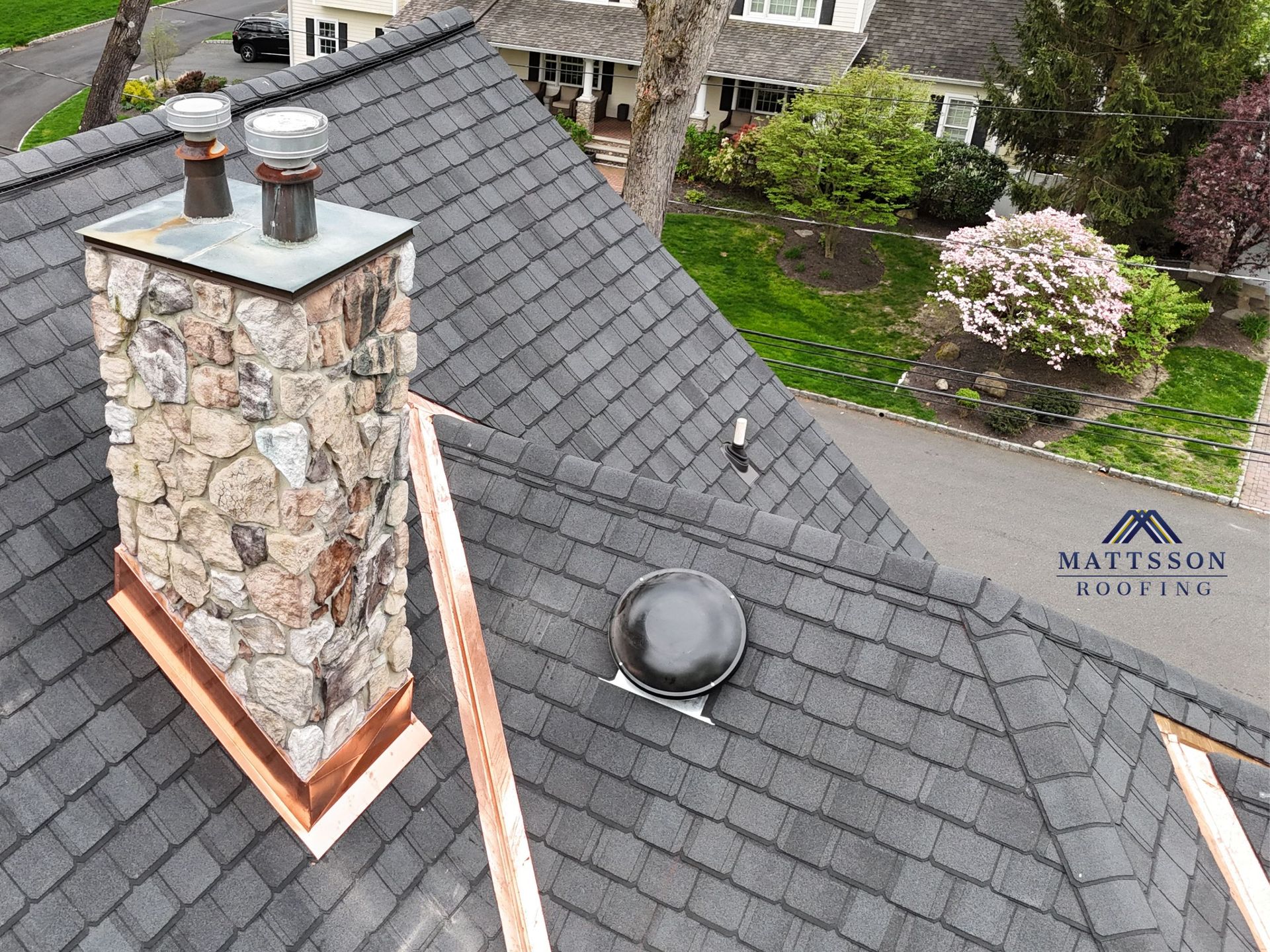
Chimneys, skylights, valleys, and pipe penetrations are where roofs fail first. Quality step and counter flashing — and copper where it counts — is the difference between a roof that lasts and one that leaks in five years.
Materials
Considering a slate or cedar roof?
Slate and cedar are beautiful and long-lived, but they demand experience to install and repair correctly. We work in slate, cedar shake, asphalt, and metal, and we’ll tell you honestly which makes sense for your home and budget.
Inspections
How often should you inspect your roof?
Every few years, and after any major storm. A quick drone inspection catches small issues — a lifted shingle, worn flashing — before they become interior damage. Our inspections are free for active leaks and roofing concerns.